
Trace Rockdale County Former Owners by Era
The backward trail starts with the newest deed. From there, the Rockdale Clerk of Superior and State Courts holds the deeper run of instruments affecting real estate. Historical gateways help as well. Probate files and local collections extend the inquiry whenever a modern property records index stops, and each source answers a different part of the former-owner question.
| Source | Advertised span | Custodian | Former-owner clue |
|---|---|---|---|
| Current deed indexes | GSCCCA from 1999; 1993 through 1998 being added | Rockdale Clerk / GSCCCA | Grantor, grantee, book/page, instrument and date |
| Historical deeds | 1870 through 1975 | Clerk / Cott historical gateway | Earlier conveyances and deed images |
| Historical plats | 1947 through 1996 | Clerk / Cott historical gateway | Subdivision, lot, block and parent-tract context |
| Homestead records | 1871 through 1904 | FamilySearch film 325962 | Property-centered Court of Ordinary records |
Start with the newest known deed, even when the target owner lived long ago. Its legal description and prior-deed citation give a firmer bridge than a modern street address. Two online indexes do most of this work. The GSCCCA Real Estate Index supports name and book/page searching, and the Cott historical index carries Rockdale County's older deed run.
Build a Rockdale County Ownership Timeline
A timeline keeps each name tied to one tract. Record date labels exactly as the source prints them, because execution, filing, and recording dates can differ. Keep the deed type beside each transfer. An estate deed or corrective deed reads differently from a normal sale, and the book and page reference should sit next to both.
The Rockdale historical Cott index is the official view-only entry point for the older deed run. It opens the older Rockdale County deed books directly.
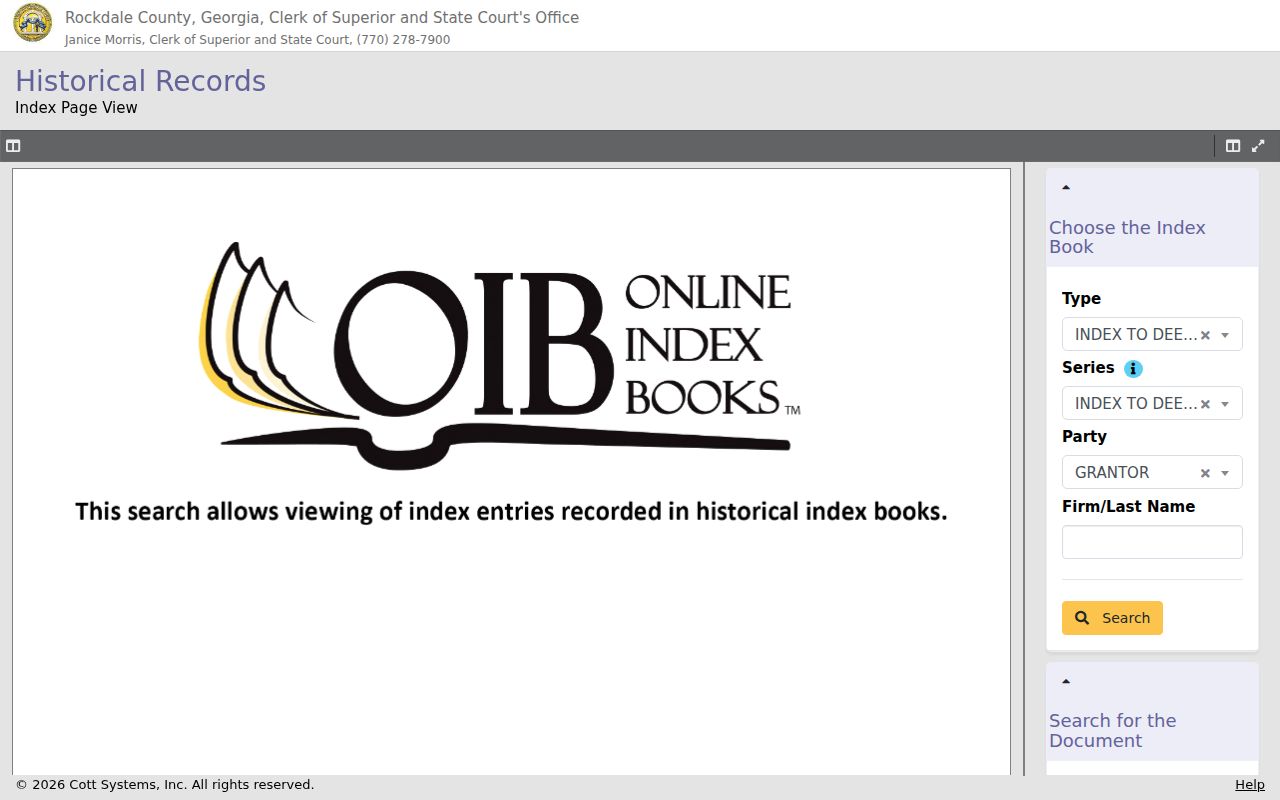
The Cott viewer turns a citation into page images. Keep the unit, section, page, TIFF, thumbnail, and sequence details the result supplies so the same reference can be pulled up again later.
| Transfer date | Grantor to grantee | Instrument | Book/page or number |
|---|---|---|---|
| Newest recorded transfer | Prior owner to current grantee | Copy the deed type | Capture the exact citation |
| Earlier transfer | Earlier owner to later grantor | Warranty, quitclaim, estate, or other deed | Follow the prior reference |
| Parent-tract event | Original tract owner to subdivider or successor | Deed plus plat | Preserve both citations |
Treat the table as a log. A release, lien, parcel split, merger, or intervening instrument may call for a broader professional title examination before anyone relies on the chain.
Rockdale County Deed Names Change With Each Role
The current deed's grantee receives the interest. That same name usually becomes the grantor on the next transfer. Roles flip as the chain moves. Names vary widely. Search initials, married names, punctuation, corporate suffixes, trustees, executors, administrators, and attorney-in-fact wording in the statewide GSCCCA real-estate search, which offers name, book/page, property, instrument-type, lien, plat, and UCC routes.
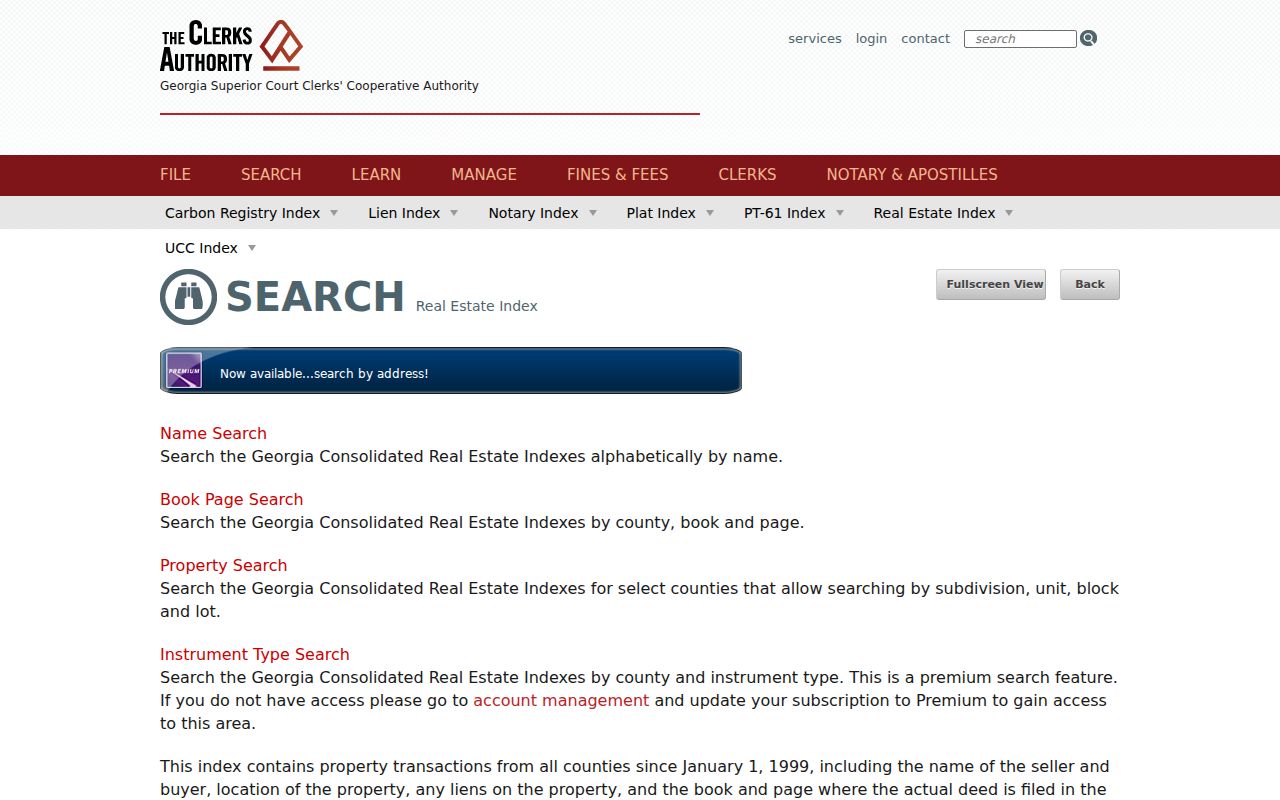
For the backward chain, keep Rockdale County selected. Use the name and book/page routes, and note that premium or account controls govern some features of the search.
- Grantor
- The party conveying an interest in the recorded instrument.
- Grantee
- The party receiving the interest stated in that instrument.
- Chain of title
- The linked sequence of instruments affecting the same legal tract.
- Reverse index
- An index organized to help locate instruments through the grantor side.
- Warranty and quitclaim deeds
- Different forms of conveyance whose legal effect cannot be judged from the label alone.
Never merge two people with the same name. Compare legal description, mailing clues, dates, acreage, and cited prior instruments before treating an index hit as part of this Rockdale County property.
Walk Rockdale County's Deed Chain in Reverse
The parcel card only sets the current search key. Prior-owner work happens in the recorded instruments. A cited book/page beats a loose name hit, because it points to the exact earlier document in the deed records. The Clerk also links its local Cott land-record name search for Rockdale County instruments.
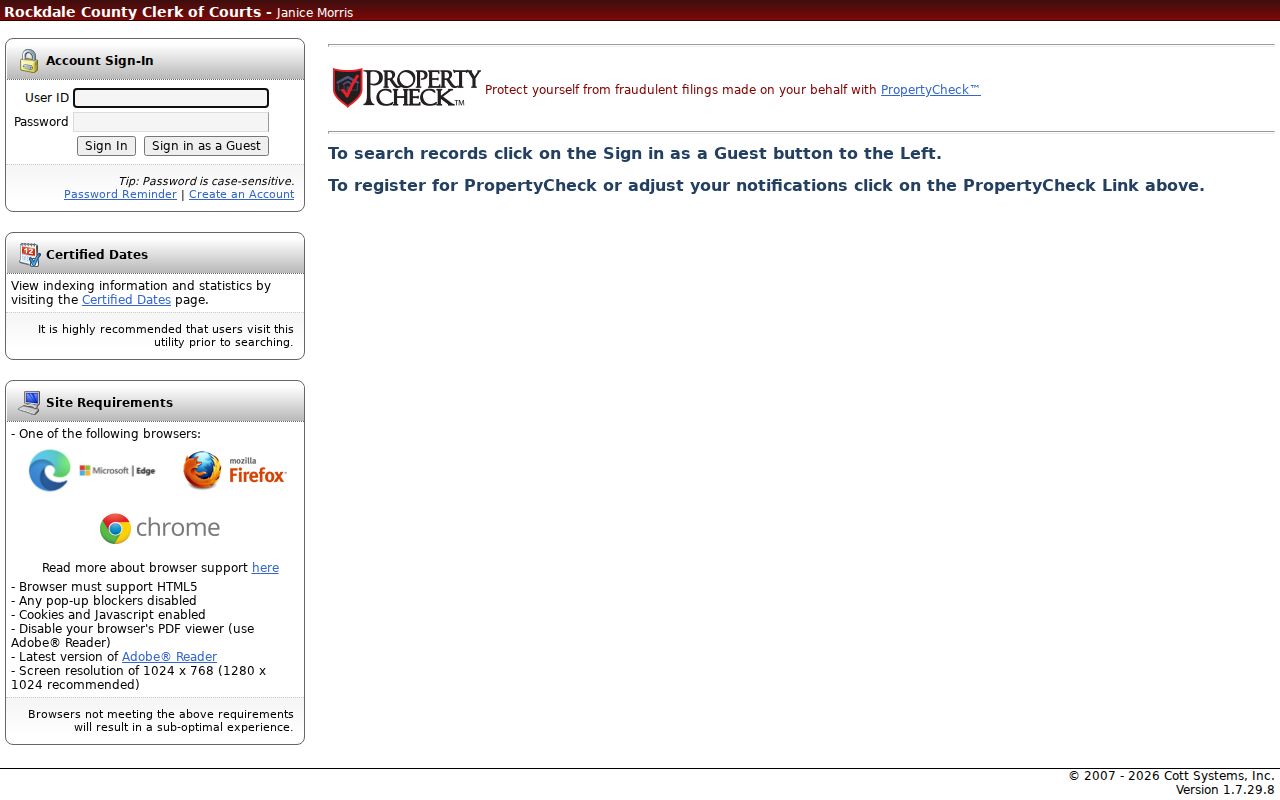
Name form matters at this entry point. Pair any result with the cited instrument and its legal description before adding a name to the Rockdale County chain.
- Search the address in qPublic, then save the full parcel ID and legal description.
- Locate the newest deed and record its grantor, grantee, deed type, date, legal description, and prior reference.
- Search that grantor as an earlier grantee and pull the cited book/page image.
- Repeat until the chain enters the historical portal, then use deed books, microfilm, archives, and library sources.
Some deeds say “being the same property” and cite an earlier instrument. Copy that citation verbatim. Cross-references can still miss intervening releases, corrections, easements, and parcel changes.
Plats Keep Rockdale County Former Owners on the Same Land
Street names and parcel IDs change. A recorded legal description keeps the land connection intact. In a subdivision, follow the subdivision name, lot, block, and plat book and page. For acreage tracts, preserve land lot, district, roads, creeks, acreage, metes-and-bounds calls, and adjoining-owner names.
Plats anchor former owners to the same ground. The Clerk's historical plat gateway covers 1947 through 1996. A plat can show that today's small parcel came from a larger parent tract, explain lot order, and clarify why one former owner appears under a different tax parcel. Read the deed with the plat, though. The map alone does not show every conveyance in the Rockdale County property records.
Note: A modern parcel ID is a search key, while the recorded deed and plat supply the durable historical land description.
Estates Can Interrupt a Simple Rockdale County Chain
A death does not transfer land by itself. An obituary proves nothing about title. Search Rockdale Probate Court for the will, petition, letters testamentary or administration, year's support, settlement, and any order involving the land. Then return to the real-estate index. Look for an executor or administrator deed, a deed from heirs, a quitclaim, or another recorded transfer in the deed records.
Give Probate Court the right details. Staff will want the decedent's name, approximate death date, case number if known, and the parcel's legal description. If title authority is the question, request the specific certified order rather than trusting an online family tree. The assessor may keep an estate or trust label. Its roll can trail a recorded conveyance.
Rockdale Probate Court can be reached through its official county site or at 770-278-7700. It publishes no fixed online case-field inventory or turnaround schedule, so confirm the current request method before relying on either.
Library Microfilm Restores Rockdale County Context
Old names fade in Rockdale County. The Conyers-Rockdale Library genealogy room keeps them close, with more than 2,000 microfilm rolls. Conyers Newspaper runs from 1878 through 2007. Census volumes and Georgia county materials fill the shelves. A foreclosure notice, estate filing, road dedication, or subdivision notice in those pages can tie a family to a specific deed reference.
Search the old place names instead. Conyers Station, Milstead, Olde Town, a creek, church, railroad, or an adjoining-owner surname can pin down a tract that a modern address search misses. Those clues translate an old tract description into present geography, though they never replace the recorded instrument itself.
Pair each find with the modern parcel ID and the Clerk book/page. The library's scanners keep spellings and dates intact. Its local-history tools can copy map labels, notices, and original wording into one research packet. That packet holds up as the ownership chain grows.
Archives Extend Rockdale County Ownership Research
Older Rockdale County records live beyond the courthouse. The Georgia Archives research gateway opens county microfilm cards, land grants, wills, and deeds, and FamilySearch catalogs older Rockdale books as well. One useful entry is the Rockdale homestead catalog, covering 1871 through 1904 on film 325962, digital group 8653217. Some FamilySearch images require sign-in or a FamilySearch Center.
Rockdale County was organized in 1870. Anything older may sit under a predecessor jurisdiction, a land-grant file, a church record, or probate rather than a Clerk deed. Keep the original county and land-lot wording intact until an instrument-backed chain carries the tract forward.
Check the Archives county card. It flags disaster notes and surviving runs for every Georgia county. A missing web result is not a missing decade.
How Deep Rockdale County Ownership Records Reach
Rockdale County's historical deed run starts with the 1870 organization and reaches through 1975; the historical plat run spans 1947 to 1996. Later instruments run through Cott or GSCCCA. The Clerk's image good-through date keeps shifting.
Go back further and the trail leaves the courthouse. Earlier clues lead elsewhere. The Clerk vault, Georgia Archives, FamilySearch, Probate Court, and the local library hold the deeper material. A chain is only as deep as its instruments. A parent tract split, a fiduciary transfer, a missing image, an unclear legal description, or a pre-1870 reference can break a clean link. Preserve the gap and ask the Clerk or a title professional, since the Rockdale County deed records guide explains copy and certification routes.
Coverage limit. Online historical access advertises deeds from 1870 through 1975. Older or unresolved links require book, microfilm, archive, probate, or professional title work.